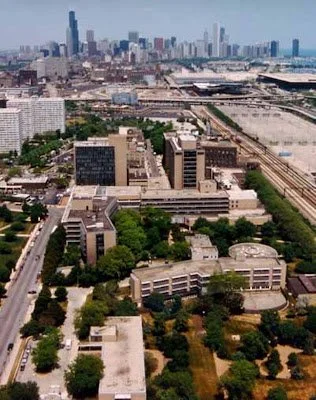
The History of the Old Michael Reese Site
Chicago Reader
Later that year, to bolster their bid to host the 2016 Summer Olympics, the city of Chicago purchased the land and made public plans to build the Olympic Village there if Chicago was awarded the Games.
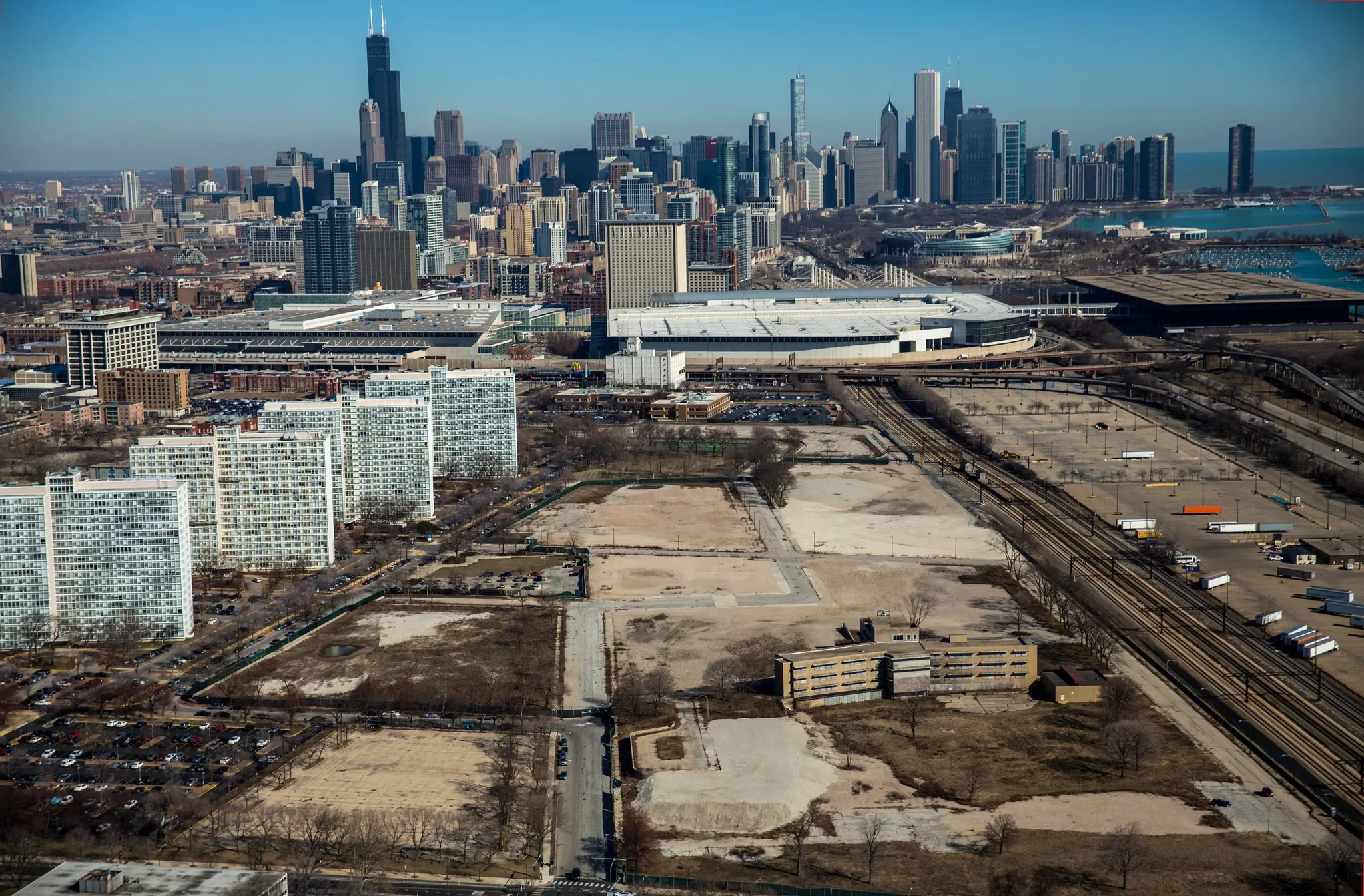
In October 2009, the International Olympic Committee named Rio de Janeiro, Brazil as the 2016 hosts. Still, the city proceeded with their plans to bulldoze the site later that month, tearing down all but two of the buildings in the complex with plans to build housing on the land.
Today, the Singer Pavilion is the only building original to the hospital complex that still stands.
Funded by the dying will of German real estate developer Michael Reese, the Michael Reese Hospital opened in 1881 as a medical facility “open to all people regardless of creed, nationality, or race.” It steadily grew into one of Chicago’s major research and teaching hospitals as the 20th century went on.
During the early 2000s, the hospital experienced dire financial stress due to declining patient volume and mounting debt. After shuttering its Internal Medicine Residency program and transferring patients to Mercy Hospital and Medical Center, also in Bronzeville, it filed for federal bankruptcy in September 2008.
By January 2009, the entire campus of what was once one of the largest and oldest hospitals in the city of Chicago had been completely vacated.
Chicago Tribune
The site has sat vacant and undeveloped since the city purchased and bulldozed it in 2009. It has been floated as a potential location for everything from Barack Obama’s presidential library to Amazon’s North America “HQ2” to a new Bears stadium, with nothing getting past the initial proposal/hypothesis stage.
In May 2021, the Community Development Commission approved the city’s near-$100 million sale of the site to GRIT Chicago LLC, a development team promising to make use of the land as part of the Bronzeville Lakefront development project. As of May 2026, with the collapse of the project’s anchor tenant and years of timelines and deadlines not met, the status of both the development and the site are unclear.